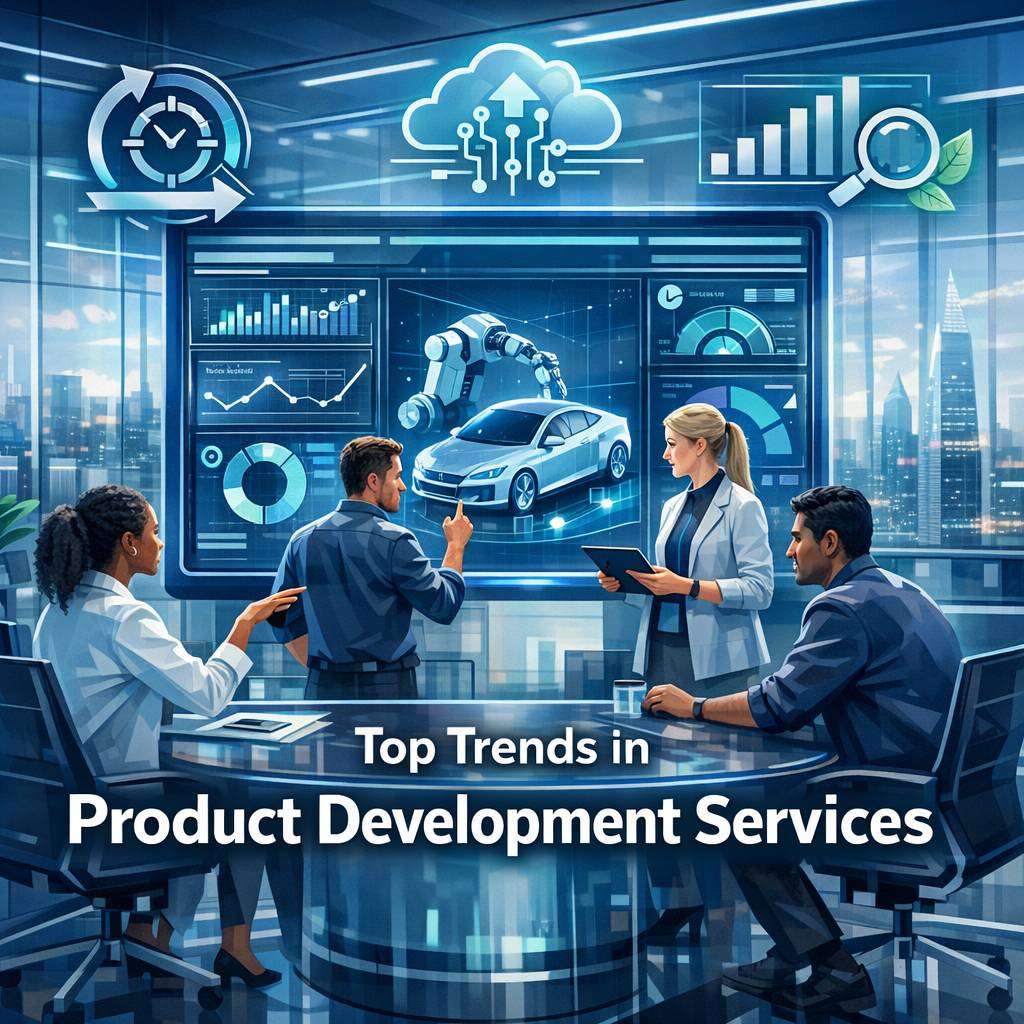
In the rapidly evolving landscape of technology and consumer expectations, product development services are shifting from linear, phase-gated processes to more adaptive, collaborative models. Organisations increasingly rely on specialised expertise to accelerate time-to-market, reduce risk, and ensure that new products resonate with diverse markets. This guest post explores the key trends shaping the future of product development outsourcing, new product development consulting, and related services.
Businesses seeking competitive advantage are turning to product development consultancy partners to access sophisticated capabilities without bearing the full cost of in-house teams. The evolving ecosystem includes advanced analytics, modular development approaches, and a growing emphasis on sustainability and ethical considerations. For executives evaluating options, understanding these trends helps identify the right partner—whether you’re a venture-backed startup, an established brand, or a scale-up pursuing aggressive growth.
The rise of modular and platform-based development
One of the standout trajectories in 2026 and beyond is the shift toward modular, platform-based product development. Rather than building every feature from scratch, organisations are adopting reusable components, open architectures, and SDK ecosystems. This approach accelerates delivery timelines, enables rapid iteration, and lowers long-term maintenance costs.
From a product development outsourcing perspective, this means engaging with consultants who can architect modular systems, define standardised interfaces, and curate a catalogue of reusable assets. For new product development, the emphasis is on building platforms that can evolve with user needs, regulatory changes, and technological breakthroughs. A platform mindset also supports cross-functional collaboration, as teams can plug in specialised modules—whether AI capabilities, IoT connectivity, or advanced analytics—without rearchitecting the entire product.
Artificial intelligence, data strategies, and ethical design
AI continues to permeate every stage of product development, from ideation and concept validation to user testing and post-launch optimisation. New product development consulting increasingly integrates AI-driven insights to prioritise features, forecast demand, and simulate user journeys. Data strategies—governance, quality, and privacy—are essential in ensuring that AI applications are reliable and compliant across markets.
For product development consultants and new product development companies, embedding responsible AI practices is non-negotiable. This includes explainability, bias mitigation, and transparent decision-making. Ethical design considerations also extend to accessibility, inclusive UX, and sustainability metrics, ensuring that products serve a broad audience while minimising environmental impact. Businesses that pair AI with human-centred design can deliver solutions that feel both intelligent and intuitive.
Hybrid delivery models and sustained collaboration
The trend toward hybrid delivery models—combining in-house teams with external experts—is gaining momentum. Companies are moving away from large, long-term outsourcing engagements toward more flexible, outcome-driven collaborations. This reflects a preference for scaled, project-based work with clear milestones, governance, and measurable value. For product development consultancy firms, the capability to operate seamlessly across time zones, languages, and regulatory environments is critical.
In practice, this means establishing integrated workstreams that align product strategy, design, engineering, and go-to-market plans. Communication tools, transparent measurement dashboards, and robust risk management practices help maintain visibility and trust. For organisations evaluating new product development consulting partners, prioritise firms with a track record of successful hybrid engagements, demonstrated velocity, and a clear pathway to launched products.
Sustainability and circularity as core design principles
Environmental considerations have moved from optional extras to central design criteria. Consumers and investors alike expect products to minimise waste, optimise energy use, and support circular economy principles. This drives up-front decisions about materials, packaging, manufacturing, and end-of-life disposal. Product development outsourcing providers are adapting by offering sustainability assessments, lifecycle analyses, and circular design workshops as part of their standard services.
New product development companies that embed sustainability early in the ideation phase are better positioned to meet regulatory requirements and to appeal to eco-conscious markets. This also creates opportunities for cost reductions through material efficiency, recyclability, and modular upgrades rather than full replacements.
Product development services drive innovation, efficiency, and market success for growing companies. By leveraging expert teams, iterative prototyping, and user-centered design, firms can de-risk ideas and accelerate time-to-market. Explore partnerships at https://forward-npd.com/ to access tailored solutions, rigorous testing, and end-to-end support. From concept through launch, these services transform concepts into scalable products, delivering measurable value and a competitive edge in fast-paced industries.
Global reach, local relevance, and regulatory agility
As markets proliferate, many organisations require a global footprint with local empathy. Product development consultants increasingly offer localisation as a core capability, ensuring that features, content, and compliance align with regional norms and legal frameworks. This is crucial for regulated industries, such as healthcare and financial services, where governance demands are stringent.
New product development consulting teams bring regulatory intelligence into the early stages of product planning, enabling faster clearance and smoother market entry. For businesses considering product development outsourcing, selecting partners with a robust regulatory playbook reduces rework, speeds approvals, and protects brand integrity across geographies.
What to look for when selecting a partner
- Proven track record in your sector and with comparable product types.
- Strong portfolio in new product development, including end-to-end programmes from ideation to launch.
- Capability in AI integration, data strategy, and responsible design.
- Experience with modular architectures and platform ecosystems.
- Flexibility to operate under hybrid delivery models with transparent governance.
- Commitment to sustainability, accessibility, and regulatory compliance.
If you are weighing options among product development outsourcing providers, a product development consultancy that can demonstrate cross-functional teams, rapid prototyping, and scalable integration is often the most valuable. A good partner will act as an extension of your organisation, translating strategic intent into executable roadmaps and measurable outcomes.
In summary, 2026 and beyond will be defined by modular architectures, intelligent data-driven decision-making, ethical and sustainable design, hybrid collaboration, and global-local delivery. By aligning with the right product development consultant or new product development company, organisations can accelerate innovation, reduce risk, and deliver compelling products that stand the test of time.