
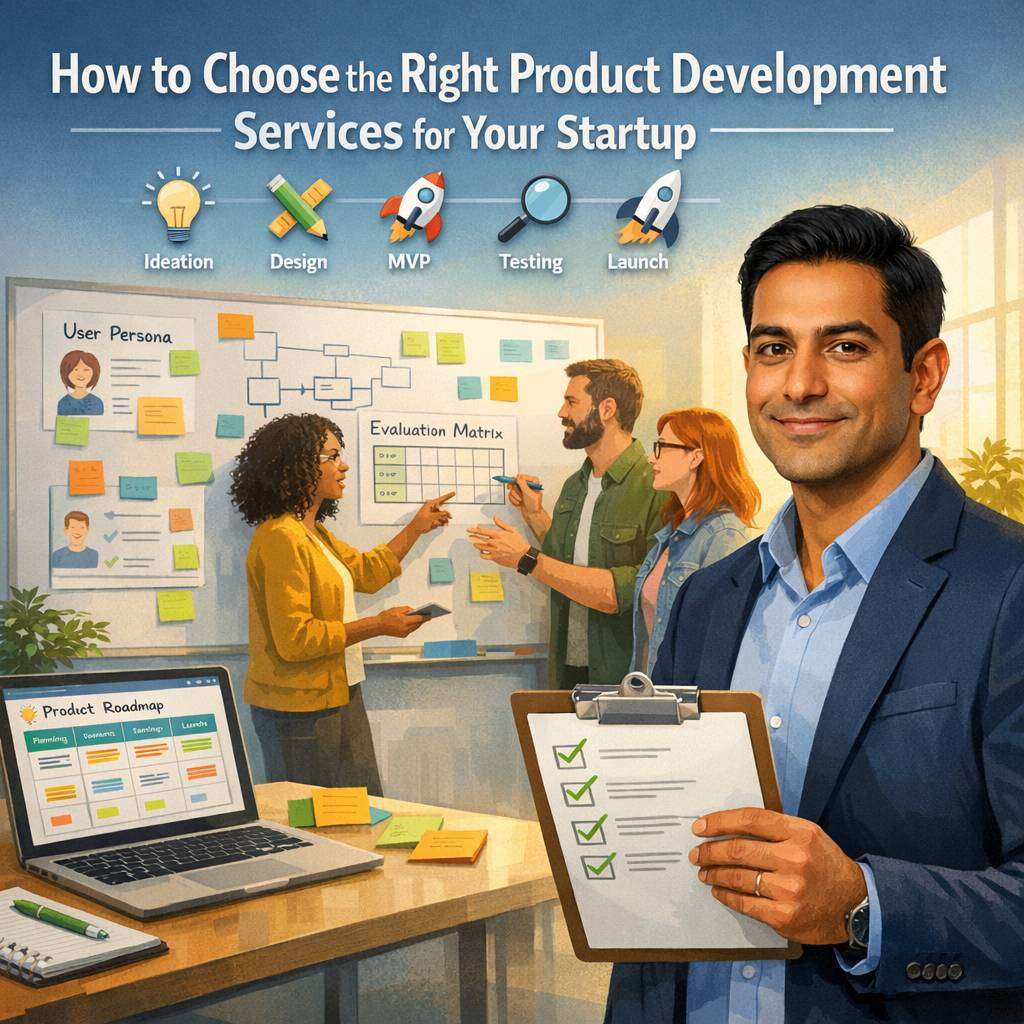
Launching a new product is a pivotal moment for any startup. It represents not only an idea but also a disciplined process that transforms that idea into a viable, scalable solution. Selecting the right partner to guide you through development of new product concepts, validation, and build can mean the difference between rapid growth and costly delays. This guide offers a practical framework for choosing the right product development services, grounded in industry best practices and real-world considerations.
As a startup, you need a partner who understands your market, your budget, and your timeline. The stakes are high, and so is the need for a clear, collaborative process. By evaluating potential collaborators through a structured lens, you can align expectations, reduce risk, and accelerate time-to-market. The goal is not merely to find a vendor, but to establish a relationship with a new product development consultant or a new product development company that can act as an extension of your team.
Development of new product
When evaluating capabilities for development of new product, start with a thorough assessment of the partner’s track record in your domain. Look for demonstrated success with similar products, stages of development, and the ability to navigate regulatory, safety, or compliance requirements specific to your industry. Ask for case studies and references that reveal not only technical proficiency but also how they manage product strategy, user experience, and go-to-market planning.
Key questions to guide your assessment:
- How do you structure the development process from concept to MVP or prototype?
- What metrics do you track to measure progress and risk?
- How do you handle requirements changes and scope creep?
- What is your approach to design for manufacturability or scalable software architecture?
Another vital consideration is your potential partner’s approach to hypothesis testing and learning. A strong focus on NPd new product development concepts—like iterative prototyping, user feedback loops, and rapid validation—can prevent wasted effort and align the product with customer needs from an early stage. Ensure the partner has a clear plan for descope and pivot options when validation results indicate a different direction.
Product development companies
Product development companies vary widely in emphasis—some specialise in hardware, others in software, and many in mixed domains. Start by identifying firms with a landscape aligned to your product’s core terrain. If your startup blends hardware and software, you’ll need an orchestrator who can manage cross-disciplinary teams, supply chains, and firmware or firmware-like integrations with digital platforms. If you’re building a software-first product, you’ll want teams with strong UI/UX, architecture, data strategy, and cloud infrastructure capabilities.
Consider the team composition and collaboration model. Do they provide end-to-end services, or do you need to co-create with your internal team and rely on the firm for specific functions? Transparency is critical: seek a clear engagement model, milestones, deliverables, and a fee schedule. A reputable product development company will be upfront about risks, potential bottlenecks, and an honest timeline with buffered milestones for testing and learning.
Evaluate cultural fit and communication. The right partner will speak your language, share your startup’s urgency, and adapt to your decision-making tempo. In small startups, alignment on vision and pace is often more important than the exact technical pedigree. Regular status updates, collaborative tools, and accessible leadership contribute to a smoother partnership and faster iterations.
NPD new product development
NPd new product development is about turning insights into validated, customer-centric products with a feasible business model. A firm proficient in NPD will integrate market research, product strategy, and technical development into a cohesive roadmap. Look for these signs:
- A clear process for opportunity discovery, hypothesis formulation, and prioritisation.
- Structured validation with real users, early prototypes, and measurable learning outcomes.
- A strategy for risk management, including technical feasibility, market viability, and customer adoption.
- The ability to translate validated learnings into product requirements, sprint plans, and release planning.
Ask potential partners to walk through a real NPd example from a previous engagement. How did they identify a problem worth solving, validate the concept, and move to a minimum viable product? What trade-offs were made, and how were the outcomes measured? The best consultants will show a disciplined approach to learning, adapting, and delivering value at every stage.
Product development outsourcing
Product development outsourcing can unlock access to specialised expertise, faster delivery, and scalable teams. To maximise value, align outsourcing with your core competencies and strategic priorities. Define what you want from the relationship: speed to market, technical depth, design excellence, or regulatory compliance?
Key considerations for outsourcing:
- Governance and ethics: establish clear ownership of IP, data protection, and confidentiality.
- Communication cadence: scheduled reviews, shared dashboards, and escalation paths.
- Quality assurance: rigorous testing, standards compliance, and traceability.
- Flexibility: scalable teams that can ramp up or down in response to milestones and feedback.
- Cost transparency: detailed estimates, change-order processes, and predictable budgeting.
A reputable outsourcing partner will provide a transparent engagement model, clearly delineate responsibilities, and operate with the same level of accountability you expect from in-house teams. They should also integrate with your product strategy, ensuring that every sprint delivers tangible value aligned with user needs and business goals.
Product development services drive innovation from concept to marketplace, helping teams turn ideas into scalable solutions. Our approach blends user research, rapid prototyping, and rigorous testing to reduce risk and accelerate timelines. With collaborative frameworks and cross-functional expertise, we align business goals with technical feasibility for durable products. For more information, visit https://forward-npd.com/ to explore our offerings and case studies, illustrating how strategic product development services can transform concepts into successful, customer-centered outcomes.
New product development consultant
A new product development consultant can be a catalyst for turning ideas into validated opportunities. When engaging a consultant, seek a partner who combines strategic insight with practical execution capability. They should help you frame the problem, validate it with real evidence, and convert learnings into actionable plans and requirements.
Look for:
- Strong discovery capabilities: ethnography, stakeholder interviews, and user journey mapping.
- Strategic clarity: a well-defined product vision, market positioning, and a viable business model outline.
- Execution discipline: a pragmatic roadmap, prioritised backlogs, and a plan for rapid prototyping.
- Collaborative leadership: the consultant acts as a facilitator, enabling your team to own the eventual product decisions.
New product development company
A dedicated new product development company brings structure, discipline, and a portfolio of tools to your startup. When choosing such a partner, assess their approach to product strategy, design thinking, and engineering excellence. Ensure they offer a robust process for risk assessment and contingency planning, a track record of successful NPd endeavours, and a culture of transparency and continuous improvement.
In summary, selecting the right product development services requires a balanced view of capability, collaboration, and strategic alignment. By focusing on NPd principles, evaluating for domain expertise, and ensuring clear governance, your startup can partner with a provider who accelerates learning, reduces risk, and delivers a compelling product with real market traction. With the right partner, development of new products becomes not just a project, but a disciplined capability that powers sustainable growth.