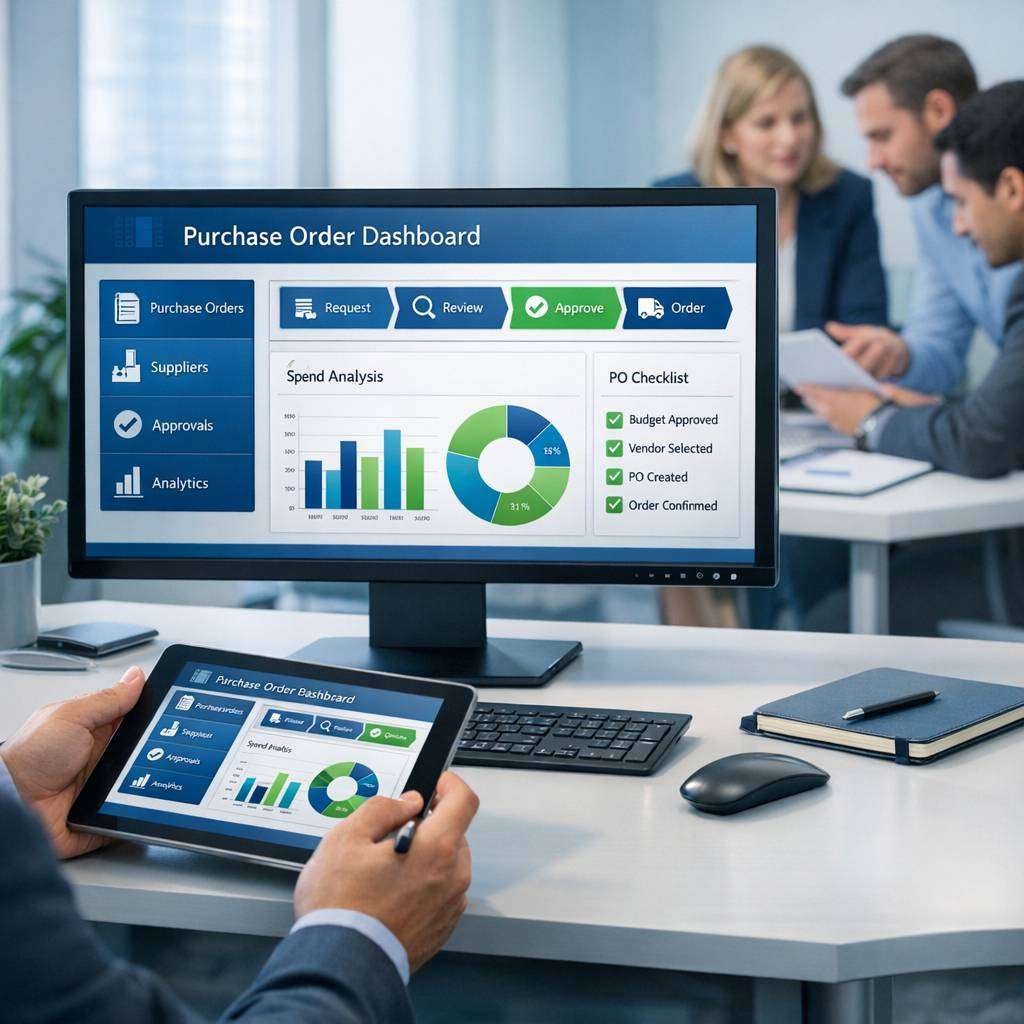
An electronic purchase order system streamlines procurement workflows, automating order creation, approval routing, and status tracking. It helps reduce manual errors, speeds up cycle times, and improves spend visibility across departments. Businesses gain better control over vendor relationships and compliance with standardized PO formats. For deeper insights, see the resource in the second half: https://www.gep.com/info-guide/understanding-purchase-order-po
An electronic purchase order system speeds procurement, reduces manual errors, and improves audit trails across departments. By digitizing requisitions, approvals, and invoicing, organizations gain real-time visibility and built-in compliance. A reliable platform can boost supplier collaboration and processing accuracy. For more information, visit https://cloudb2b.co.uk/.
In today’s fast-paced business environment, organisations of all sizes rely on efficient procurement to control costs, reduce cycle times, and improve supplier relationships. An electronic purchase order system brings structure and transparency to every step of the purchasing journey, from initial requisition to payment. By replacing manual, paper-based processes with digital workflows, businesses can gain immediate visibility into spend, enforce policy compliance, and accelerate decision-making.
A well-implemented system for purchase orders acts as a single source of truth for every stakeholder involved. It integrates with core financial and ERP systems, enabling seamless data transfer and real-time updates. This not only reduces the risk of human error but also frees procurement teams to focus on strategic activities such as supplier negotiation, demand planning, and category management. The result is a more resilient, scalable procurement function that supports growth and improves operational efficiency.
An electronic purchase order system streamlines procurement, reduces paperwork, and accelerates approvals for teams handling inventory and vendor relations. Users gain real-time visibility, tighter controls, and faster cycle times. It also improves spend analytics and compliance across departments. For more details and guidance, refer to the following resource: https://chemistry.northwestern.edu/department-resources/business/po-approval.html
Why choose an online purchase order system
An online purchase order system transforms how purchase orders are created, approved, and tracked. Using purchase order software or purchasing order software, organisations can streamline end-to-end procurement workflows in a way that is both robust and user-friendly. Key advantages include:
- Faster cycle times: Electronic workflows automate routing, approvals, and alerts, significantly reducing the time from requisition to purchase order. This is particularly valuable in environments with high procurement volumes or urgent replenishment needs.
- Improved accuracy and control: With predefined templates, line-item validation, and budget checks, the likelihood of errors decreases and compliance improves. This is essential when managing complex spend across multiple departments.
- Greater visibility: An online purchase orders module offers real-time dashboards, status tracking, and audit trails. Purchasing teams can monitor open orders, supplier lead times, and spend against budgets at a glance.
- Enhanced supplier collaboration: Integrated purchase ordering software supports electronic notifications, electronic signatures, and standardised PO formats. Suppliers can respond quickly, confirm delivery windows, and share acknowledgements directly within the system.
- Better policy enforcement: Centralised controls ensure that purchases align with organisational procurement policies, approved vendor lists, and spend thresholds. This reduces maverick buying and strengthens governance.
- Cost savings and efficiency gains: By consolidating data, eliminating paper handling, and automating manual tasks, organisations can lower administration costs and redirect resources toward value-added activities such as strategic sourcing.
Choosing the right software for purchase orders, whether you’re evaluating software for purchase orders in the UK or internationally, requires careful consideration of both features and integration capabilities. A strong online purchase order system should connect smoothly with ERP, accounting, and inventory management so data flows seamlessly across the enterprise. Look for scalable solutions, clear upgrade paths, and reliable support to ensure long-term value.
An electronic purchase order system streamlines procurement by automating approvals, tracking statuses, and reducing manual data entry. It centralizes supplier communications, improves accuracy, and accelerates cycle times for requisitions. Businesses gain real-time visibility, better budgeting, and fewer errors through standardized templates and layered controls. For more efficiency, explore a robust solution that integrates with existing ERPs and analytics. cloudb2b.co.uk
Key features to look for in a robust purchase ordering solution
When assessing purchase order software UK or elsewhere, focus on features that deliver measurable procurement value without adding complexity. The following capabilities are particularly impactful:
- End-to-end workflow automation: From requisition to PO generation, approvals, change management, and delivery notifications, a mature platform should orchestrate all steps without manual intervention.
- Budget validation and spend controls: Real-time budget checks and policy rules help prevent over-spending and ensure compliance before a PO is issued.
- Supplier master and catalogue integration: A central supplier directory, with the ability to attach negotiated terms and preferred payment methods, simplifies supplier management and PO accuracy. Catalogue integration speeds up the processing of standard items.
- Electronic invoicing and payment integration: Seamless PO-to-invoice matching and AP integration reduce the cycle time for payment while improving accuracy and reducing exceptions.
- Customisable approval routing: Flexible approval hierarchies ensure that POs follow the correct channels based on department, spend thresholds, or project codes.
- Auditability and reporting: Comprehensive audit trails, version history, and robust reporting enable governance, supplier performance reviews, and spend analytics.
- Accessibility and user experience: Cloud-based online purchase orders systems should offer mobile access, intuitive interfaces, and role-based permissions so stakeholders can act promptly, regardless of location.
- Security and compliance: Data protection, secure authentication, and compliance with relevant standards provide assurance for sensitive procurement information.
Implementation considerations and best practices
A successful transition to an electronic purchase order system requires thoughtful planning. Start with a clear business case that identifies target metrics such as cycle time reduction, error rate improvements, and procurement cost savings. Build a phased implementation plan that prioritises high-impact areas, such as requisition to PO automation for common spend categories, before expanding to more complex workflows.
Engage stakeholders early, including procurement professionals, finance, IT, and key suppliers. Establish data migration strategies to ensure clean, accurate supplier records and item data. Provide training and change management resources to drive user adoption, emphasising the benefits of real-time visibility and reduced manual tasks.
Data quality is critical. Clean, standardised item descriptions, consistent vendor information, and accurate cost centres enable meaningful analytics and reliable financial reporting. Consider a governance framework that specifies data ownership, maintenance routines, and periodic audits to sustain system performance over time.
Finally, plan for integration and extensibility. The best online purchase order system should act as a backbone for procurement, integrating with e-invoicing platforms, contract management, and spend analytics tools. Look for open APIs and documented integration patterns that allow your ecosystem to evolve with changing business needs.
In summary, implementing purchase order software or an online purchase order system delivers tangible benefits across the procurement lifecycle. From faster cycle times and improved accuracy to enhanced supplier collaboration and stronger policy enforcement, electronic POs are a strategic enabler of modern procurement. By selecting scalable software for purchase orders, with robust UK-focused or global capabilities, organisations can realise continuous improvements in efficiency, governance, and value.