
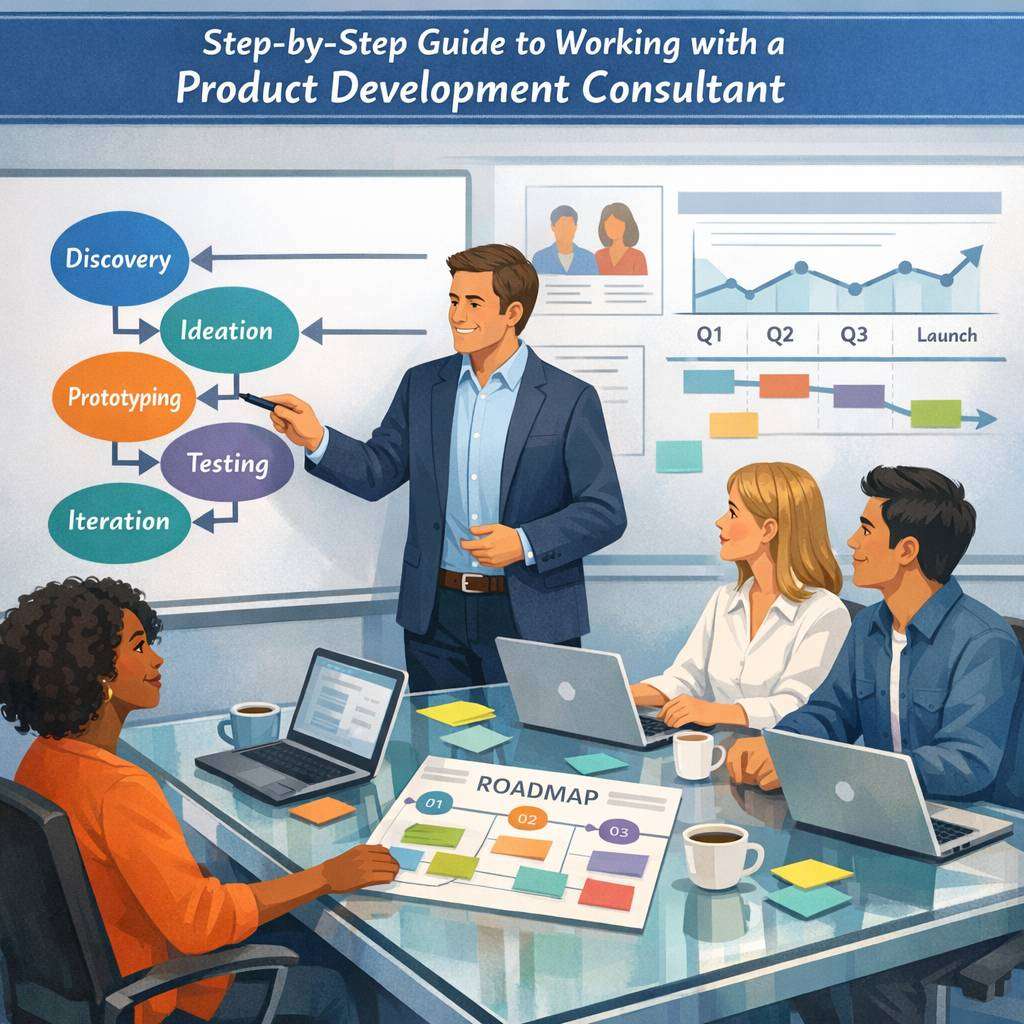
Starting a new product initiative can be transformative for a business, yet navigating the complexities of ideation, validation, and delivery requires a structured approach. This guide, written from the perspective of an expert in product development, outlines a practical, step-by-step process to collaborate effectively with a product development consultant. It emphasises clear outcomes, robust governance, and actionable milestones to maximise the chances of a successful product launch.
Product Development Uutsourcing
Outsourcing product development can offer access to specialised capabilities, accelerated timelines, and scalable resources. When engaging in product development outsourcing, define the scope early and establish a formal briefing that captures the customer problem, market context, regulatory considerations, and success metrics. A seasoned consultant will help you select the right mix of internal and external skills, align the outsourcing model with your strategic objectives, and implement governance that ensures transparent progress tracking, quality control, and risk management. Expect a staged plan with clear decision gates to prevent scope creep and to optimise value from external partners.
NPD new product development
New product development (NPD) is a structured journey from ideation to market launch. A professional consultant guides you through stages such as discovery, concept screening, business case development, prototyping, testing, and go-to-market readiness. The consultant’s role includes facilitating workshops, validating assumptions with qualitative and quantitative data, and sequencing activities to de-risk the project. Emphasise measurable outcomes at each stage—customer validation, technical feasibility, cost modelling, and a compelling value proposition. Regular milestone reviews help maintain momentum and ensure alignment with the overarching business strategy.
New Product Development Company
Partnering with a credible new product development company brings areal impact when combined with your internal capabilities. When selecting a partner, assess their portfolio, industry experience, and the depth of their product development services. A competent firm will provide end-to-end support—from opportunity identification and concept development to design for manufacturability and commercialisation planning. The consultancy will typically establish a collaborative governance framework, shared roadmaps, and transparent budgeting to avoid surprises. Establishing a strong working relationship early on will enable smoother decision-making and faster execution.
Product Development Services
A well-rounded suite of product development services covers every phase of the lifecycle. Early-stage services include market and user research, opportunity assessment, and concept ideation. Development services span industrial design, engineering, prototyping, and verification testing. Commercialisation services address pricing strategy, go-to-market planning, and post-launch optimisation. When engaging in product development services, insist on a living specification that evolves with learning, a traceable decision log, and iterative reviews. This ensures alignment between technical feasibility and business value and helps you measure progress against clear success criteria.
New Product Development Consultant
A skilled new product development consultant acts as a catalyst and facilitator, not merely a vendor. Their expertise should cover strategy, process design, risk management, and cross-functional collaboration. A good consultant will conduct a diagnostic to identify bottlenecks, then tailor a customised development plan that fits your organisation’s culture and capabilities. They will establish governance rituals—weekly stand-ups, monthly reviews, and quarterly strategy sessions—to keep stakeholders informed and engaged. Look for evidence of repeatable processes, such as a formal Stage-Gate or Agile framework adapted to your context.
development of new product
The development of a new product is a cycle of learning and iteration. Begin with objective problem framing, ensuring your product concept addresses a clear customer need with differentiating benefits. Move into rapid prototyping to test core assumptions, using fast feedback loops from real users. The consultant should help you quantify feasibility, model costs, and identify regulatory or safety considerations early. Maintain document control and decision records to capture rationale behind design choices. A disciplined approach reduces rework, accelerates time-to-market, and improves the return on investment.
new product development services
When evaluating new product development services, map them to your critical path for delivering the product to customers. Services should be modular yet cohesive, enabling staged investments and measurable outcomes. A competent provider will offer discovery, product strategy, design and engineering, validation testing, and launch readiness. They will also assist with manufacturing readiness, supplier qualification, and compliance checks appropriate to your sector. Ensure service levels, responsibilities, and escalation paths are clearly defined in a written agreement.
product development consultancy
A product development consultancy brings strategic insight, disciplined process, and objective oversight. The consultant’s remit includes translating market insights into a credible business case, developing a scalable product architecture, and aligning the organisation around a shared roadmap. Governance should include objective milestones, risk registers, and transparent budgeting. Expect the consultant to challenge assumptions constructively, facilitate cross-functional collaboration, and deliver documentation that can be used by internal teams long after the project wraps.
onboarding and discovery
The engagement typically begins with onboarding and discovery. During this phase, gather your business objectives, customer personas, and market context. The consultant will perform a gap analysis between current capabilities and the desired product vision, identify critical success factors, and establish a high-level roadmap. A thorough discovery sets realistic expectations and prevents later misalignment, ensuring that all stakeholders are aligned on purpose and priorities.
strategy and roadmapping
Clear strategy and robust roadmapping translate insights into executable plans. The consultant should co-create a product strategy that defines target markets, value propositions, key features, and differentiators. A practical roadmap outlines phased releases, milestones, resource requirements, and dependency management. It should be adaptable to new information from ongoing validation activities and regulatory feedback, while maintaining a strict governance cadence to keep the project on track.
design, engineering, and prototyping
In the design, engineering, and prototyping phase, emphasise speed without compromising quality. Rapid prototyping allows you to validate form, function, and manufacturability early. The consultant can introduce iterative loops, design-for-manufacture principles, and tolerance analyses to reduce later rework. Document these iterations with traceable change logs so you can demonstrate progress to stakeholders and investors.
testing, validation, and regulatory readiness
Testing and validation are pivotal to de-risking a new product. Plan for functional testing, user acceptance testing, and reliability assessments, along with regulatory reviews where applicable. The consultant should help prioritise test cases, manage experimental data, and prepare regulatory submissions or compliance dossiers. Early identification of issues in this phase saves time and cost downstream and supports a smoother launch.
go-to-market and launch planning
Go-to-market planning translates product readiness into commercial impact. The consultant will help define pricing, channel strategy, user messaging, and launch metrics. A staged launch approach—pilot, regional roll-out, and full-scale deployment—can be more manageable and informative than a single big-bang release. Ensure readiness reviews precede each launch stage and that post-launch monitoring plans are in place to capture learnings for future iterations.
governance, risk, and assurance
Strong governance, risk management, and assurance processes are non-negotiable. Establish roles, responsibilities, and decision rights for internal teams and external partners. Maintain a risk register, with owners, mitigations, and periodic review dates. Assurance activities—quality audits, design reviews, and compliance verifications—should be scheduled at meaningful milestones to protect both schedule and budget.
continuous improvement and scale-up
After initial launch, the focus shifts to continuous improvement and scale-up. Analyse performance data, collect customer feedback, and prioritise feature enhancements. The consultant can help institutionalise a learning loop, refine the product backlog, and explore opportunities for platform extensions or adjacent markets. A culture of ongoing optimisation ensures durability and long-term value from your development efforts.
If you are considering product development outsourcing or seeking a new product development consultant, this step-by-step approach provides a structured pathway to deliver meaningful results. By aligning your organisational capabilities with specialised product development services, you can accelerate innovation, reduce risk, and achieve a successful market introduction.
A product development consultant guides teams through ideation, validation, and scalable execution, ensuring market fit and efficient workflows. They translate customer insights into actionable plans, prioritize features, and mitigate risks. For strategic support, visit https://forward-npd.com/.